
The conquest of time
- Venduto
Informazioni sul libro
| Autore : | Dominique Fléchon |
| Editore : | Flammarion (2011) |
| Legatura : | Hardcover w/jacket (456 pages) 9 inches x 11 inches |
| Lingua : | French |
| ISBN : | 978-2-08-125039-0 |
| EAN : | 9782081250390 |
Descrizione
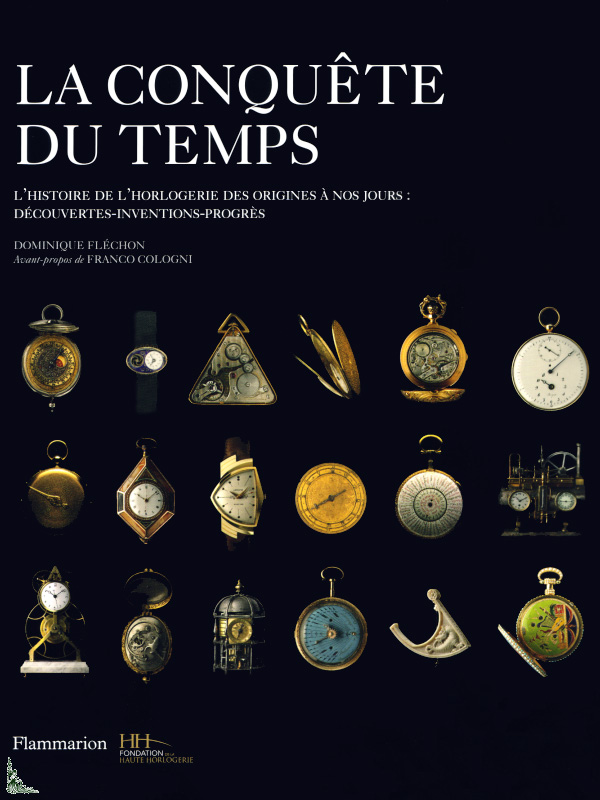
The conquest of time, by D. Fléchon, Ed. Flammarion, 9 inches x 11 inches ( 23 cm x 28 cm ), hardcover book with 456 full color pages
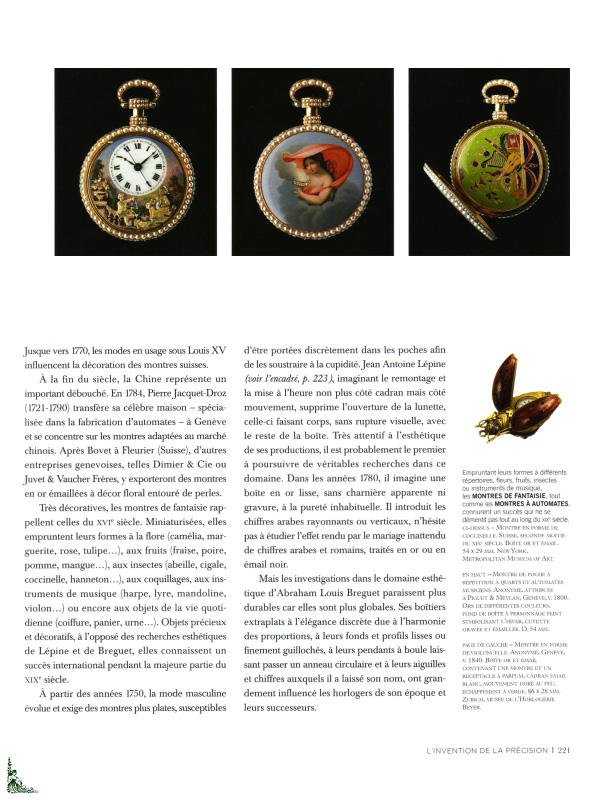
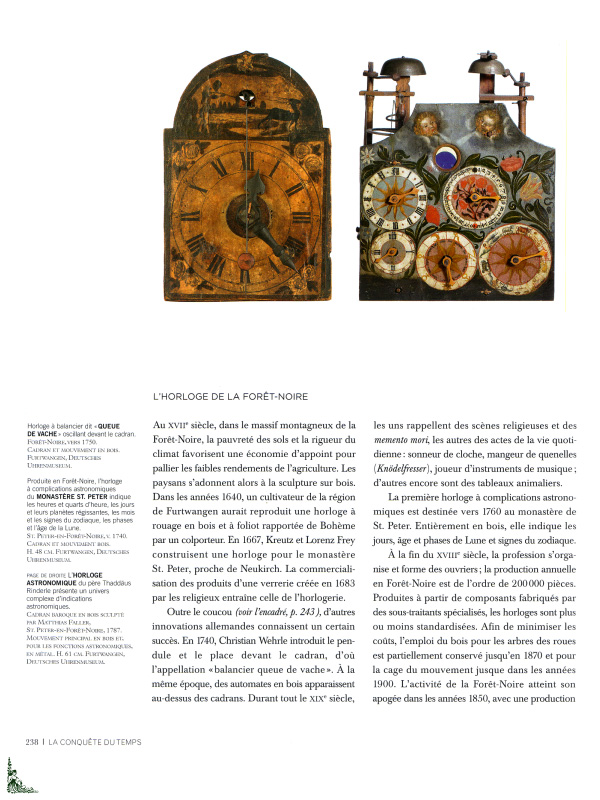
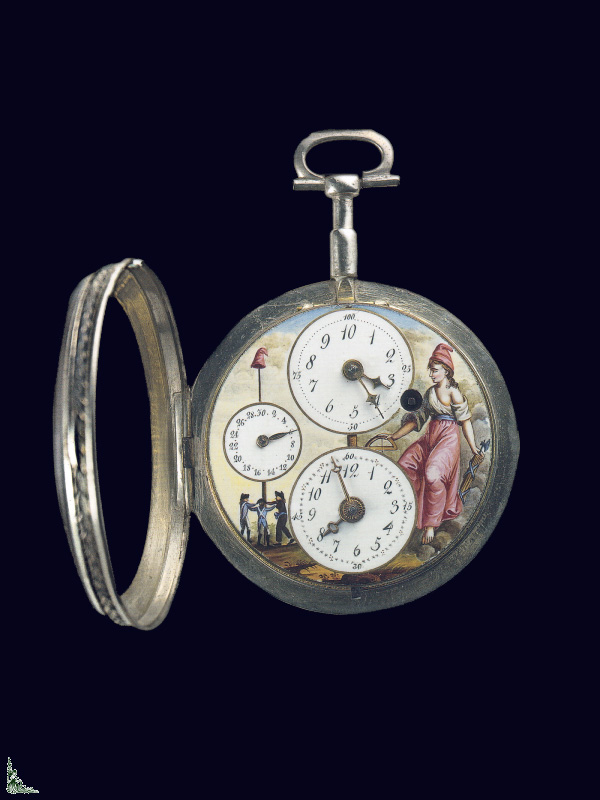
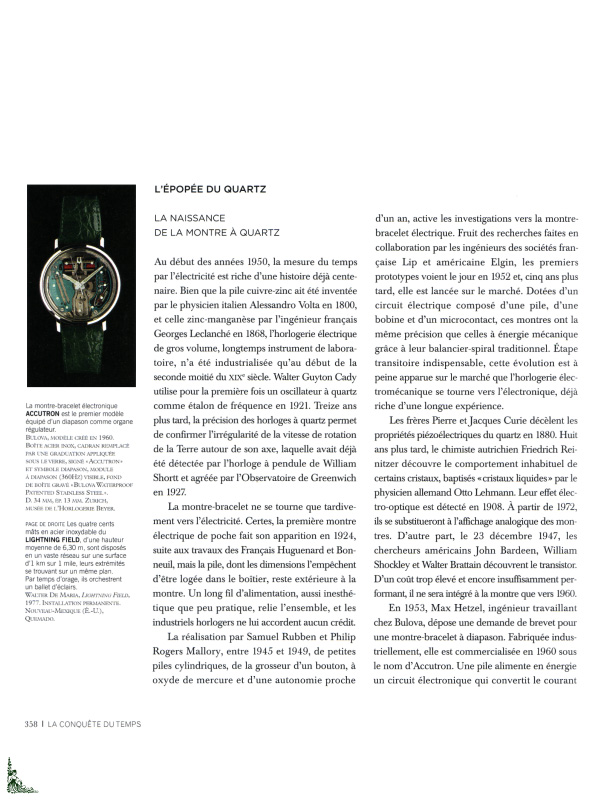
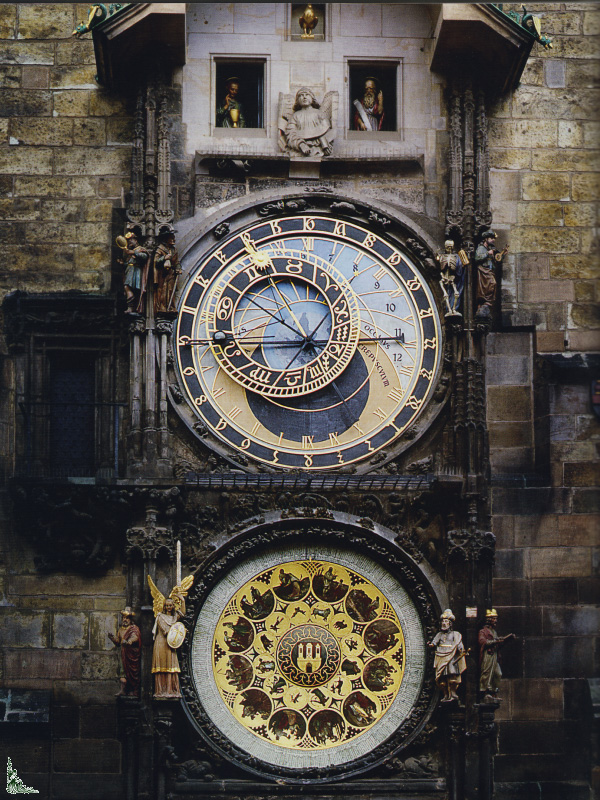
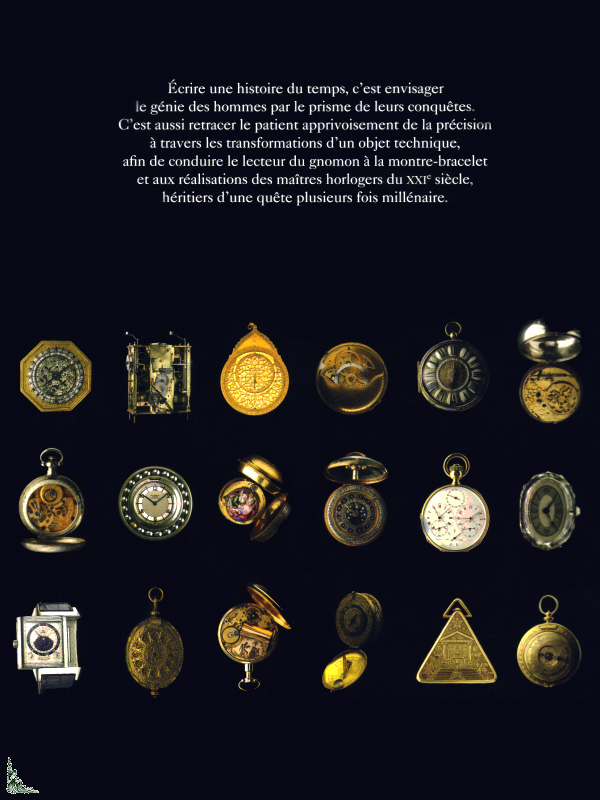
This great hardcover book with 456 full color pages with superb illustrations retraces the history of time, from origins to the present times.
Critical to the organization of social life, for the agricultural and industrial production and trade, horological inventions were fed watch the progress and needs of their time as they have promoted the great discoveries.
Approaches combining historical, scientific and human, the author examines the watch as a science but also as an art, dedicating this book to the genius of the man who, in his relentless quest for precision has continued to create instruments of a complexity and beauty even more amazing.
He retraces their history, from the early approaches to the division of time modeled on the observation of the stars to the measuring devices the most advanced (mechanical clocks, electronic and atomic clocks).
In doing so, it establishes the link between this history and the progressive mastery by humanity of a world a world on which a large sun - that of reason - no more go down.
This richly illustrated panorama is supplemented of teaching materials that will make this book a reference work for specialists in the subject as a book of discovery aimed at novices.
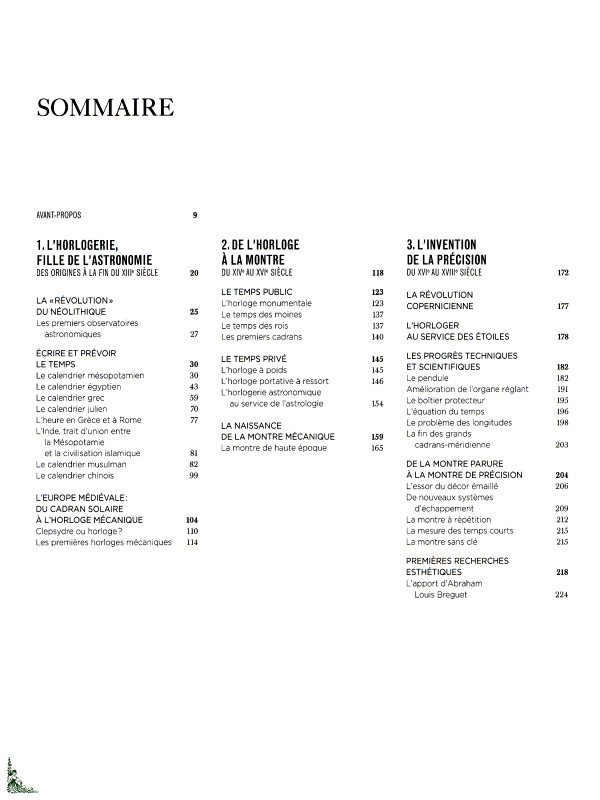
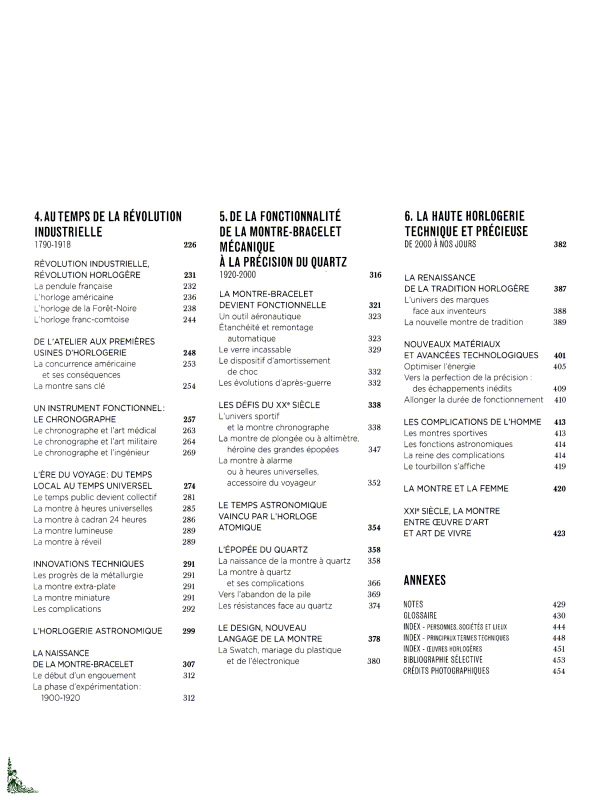
Contents:
1. WATCH MAKING, DAUGHTER OF ASTRONOMY (from origins to the late 13th century)
- The Neolithic Revolution
- Writing and predict time
- Medieval Europe: from sundial to mechanical clock
- Public time
- Private time
- The birth of the mechanical watch
- The Copernican revolution
- The watchmaker in the service of world leaders
- The technical and scientific progress
- From fashion watch to precision watch
- First aesthetic research
- Industrial revolution, watch revolution
- From workshop to the first factories
- A functional instrument: chronograph
- The era of travel: from local time to Universal Time
- Technical innovations
- The astronomical clock
- The birth of the wristwatch
- The wristwatch becomes functional
- The challenges of the 20th century
- Astronomical time defeated by the atomic clock
- The era of quartz
- Design, the new language of watches
- The revival of the watch making tradition
- New materials and technological advances
- The complications for men
- The watch for women
- 21st century, the watch between art and art of living
- Glossary
- Index - People and places
- Index - Main technical terms
- Index - Watch works
The French texts are written by Dominique Fléchon.
 Description françaiseunfold_more
La conquête du temps
Détails du livre
| Auteur : | Dominique Fléchon |
| Éditeur : | Flammarion (2011) |
| Reliure : | Relié sous jaquette (456 pages) 23 cm x 28 cm ( 9 inches x 11 inches ) |
| Langue(s) : | Français |
| ISBN : | 978-2-08-125039-0 |
| EAN : | 9782081250390 |
Description
La conquête du temps, de D. Fléchon, Ed. Flammarion, 23 cm x 28 cm, relié avec 456 pages couleurs
Ce superbe ouvrage de 456 pages couleurs magnifiquement illustré relate l'histoire du temps, des origines de l'homme jusqu'à nos jours.
Déterminantes pour l'organisation de la vie en société, pour la production agricole et industrielle et pour les échanges commerciaux, les inventions horlogères se sont nourries des progrès et des besoins de leur temps autant qu'elles ont favorisé les grandes découvertes.
Conjuguant les approches historique, scientifique et humaine, l'auteur aborde l'horlogerie comme une science mais également comme un art, dédiant ce livre au génie de l'homme qui, dans son inlassable quête de précision n'a eu de cesse de créer des instruments d'une complexité et d'une beauté toujours plus étonnantes.
Il retrace leur histoire depuis les premières approches de la division du temps calquée sur l'observation des astres jusqu'aux appareils de mesure les plus perfectionnés (horloges mécaniques, électroniques et atomiques).
Ce faisant, il établit le lien entre cette histoire et la maîtrise progressive par l'humanité d'un monde sur lequel un grand soleil - celui de la raison - ne se couchera plus.
Ce panorama richement illustré est complété d'outils didactiques qui feront de ce livre une référence de travail pour les spécialistes du sujet autant qu'un livre de découverte destiné aux novices.
Principaux chapitres de l'ouvrage :
1. L'HORLOGERIE, FILLE DE L'ASTRONOMIE (des origines à la fin du XIIIe siècle)
- La révolution du néolithique
- Écrire et prévoir le temps
- L'Europe médiévale : du cadran solaire à l'horloge mécanique
- Le temps public
- Le temps privé
- La naissance de la montre mécanique
- La révolution copernicienne
- L'horloger au service des étoiles
- Les progrès techniques et scientifiques
- De la montre parure à la montre précision
- Premières recherches esthétiques
- Révolution industrielle, révolution horlogère
- De l'atelier aux premières usines d'horlogerie
- Un instrument fonctionnel : le chronographe
- L'ère du voyage : du temps local au temps universel
- Innovations techniques
- L'horlogerie astronomique
- La naissance de la montre-bracelet
- La montre-bracelet devient fonctionnelle
- Les défis du XXe siècle
- Le temps astronomique vaincu par l'horloge atomique
- L'épopée du quartz
- Le design, nouveau langage de la montre
- La renaissance de la tradition horlogère
- Nouveaux matériaux et avancées technologiques
- Les complications de l'homme
- La montre et la femme
- XXIe siècle, la montre entre oeuvre d'art et art de vivre
- Glossaire
- Index - personnes et lieux
- Index - Principaux termes techniques
- Index - oeuvres horlogères
Les textes en Français sont de Dominique Fléchon.
Libri simili
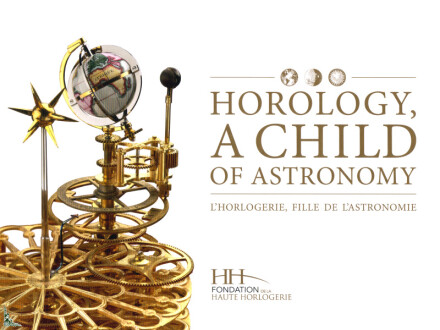
- Horology, a child of Astronomy201333.00 €Horology, a child of Astronomy, Ed. Fond. Haute Horlogerie, 11-½ inches x 8 inches ( 29 cm x 21 cm ), hardcover book with 88 full color pages - French/English edition
- The great clock - Morbier Grandfather Clock in the 19th century200643.00 €The great clock - Morbier Grandfather Clock in the 19th century, by A. Caudine, Ed. de l'Amateur, 10 inches x 12 inches ( 25 cm x 31 cm ), hardcover book with 272 full color pages
- From noon to midnight, the Master Watchmakers - Freemasonry201479.00 €From noon to midnight, the Master Watchmakers - Freemasonry, by D. Gottardini and E. Lecugy, Ed. Watchprint, 8 inches x 11 inches ( 21 cm x 28.5 cm ), hardcover book with 248 pages
- Watchmaking, by G. Daniels201175.00 €Watchmaking, by G. Daniels, Ed. Watchprint, 7-½ inches x 10-½ inches ( 19 cm x 27 cm ), hardcover book with 420 pages
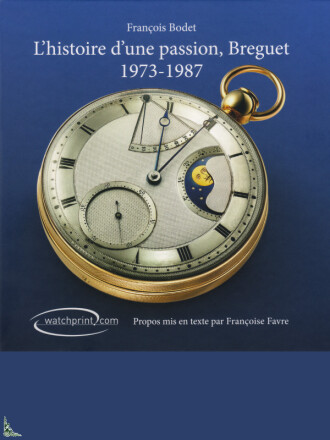
- BREGUET, the story of a passion 1973 - 1987201552.80 €BREGUET, the story of a passion 1973 - 1987, by F. Bodet, Ed. Watchprint, 7-½ inches x 7-½ inches ( 19.5 cm x 19.5 cm ), hardcover book with 128 full color pages
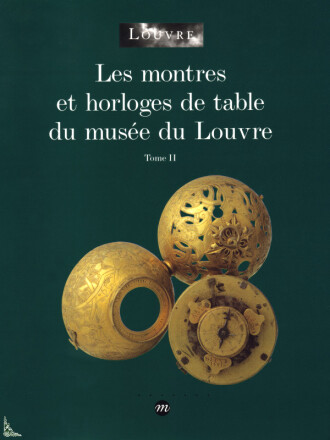
- Watches and table clocks of the Louvre Museum in Paris200053.36 €Watches and table clocks of the Louvre Museum in Paris - Vol. 2, by C. Cardinal, Ed. RMN, 8-½ inches x 10-½ inches ( 21.5 cm x 27 cm ), softcover book with 240 pages
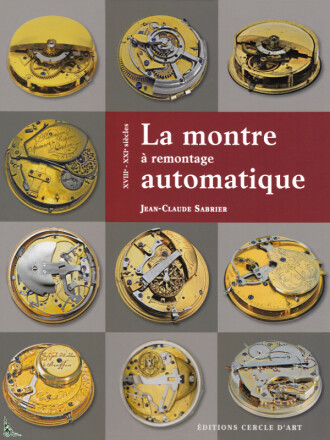
- The self-winding watch (18th - 21st centuries)201159.80 €The self-winding watch (18th - 21st centuries), by J.C. Sabrier, Ed. Cercle d'Art, 9-½ inches x 12 inches ( 24 cm x 30.5 cm ), hardcover book with 308 full color pages
- The worlds of Jacques Droz, Horological and artistic horology202179.00 €The worlds of Jacques Droz, Horological and artistic horology, by S. Girardier, Ed. Watchprint, 9 inches x 11 inches ( 23.5 cm x 28 cm ), hardcover book with 248 full color pages