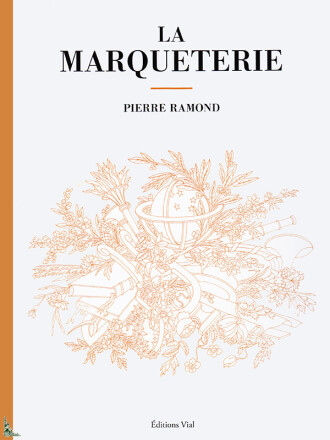

Marquetry


- Out of stock
Book information
| Author : | Pierre Ramond |
| Publisher : | Vial (2002) |
| Binding : | Hardcover w/jacket (238 full color pages) 10 inches x 14 inches |
| Language : | English |
| ISBN : | 978-0-89236-685-9 |
| EAN : | 9780892366859 |
Editorial Reviews
Marquetry, by P. Ramond, Ed. Vial, 10 inches x 14 inches ( 25 cm x 35 cm ), hardcover book with 238 full color pages - Edition Anglaise
This hardcover book with 238 full color pages presents the history of the marquetry art from its origin to nowadays, also called intarsi or inlay, which is the art of painting with wood.
The marqueter makes intricate pictures and geometric designs by cutting and fitting together thin pieces of colored wood, shell and other precious materials.
Marquetry distinguinshes the world's finest antique and contemporary furniture.
History of marquetry: from origins to the present day, on a technical level and works with characteristics of each era.
The marquetry workshop and its tools, the materials used and their implementation: the different types of wood, metal for Boulle marquetry, ivoiry, bone, mother of pearl, straw, hard stones and marble. The art of marquetry design is discussed from a practical angle.
The different techniques: the conventional method of wood marquetry "item by item" conical, collage, takeoff and restoration. Many detailed plans of tools and saws operated by hand, foot or motor.
The book is also illustrated with drawings (drawings and essences) and many photographs craftsmen at work, which describe the techniques used and the use of tools and machinery.
It also presents marquetry furniture and paintings due to the masters of the past and present in museums around the world, work of Boulle, Reisener, Vassilieffe, Gallé and others.
The book details, step-by-step procedures for new work and for restorations.
Contents:
- History
- The Marqueter's workshop
- The Materials
- Tools
- Design
- Preparation
- Techniques
- Geometric Marquetry
The English texts are written by Pierre Ramond.
 Description françaiseunfold_more
Marquetry
Détails du livre
| Auteur : | Pierre Ramond |
| Éditeur : | Vial (2002) |
| Reliure : | Relié sous jaquette (238 pages couleurs) 25 cm x 35 cm ( 10 inches x 14 inches ) |
| Langue(s) : | Anglais |
| ISBN : | 978-0-89236-685-9 |
| EAN : | 9780892366859 |
Description
Marquetry, de P. Ramond, Ed. Vial, 25 cm x 35 cm, relié avec 238 pages couleurs - English edition
Ce livre de 238 pages contenant de nombreuses et superbes illustrations couleur, retrace l'histoire de la marqueterie et son évolution depuis ses origines à nos jours.
L'auteur présente également les techniques de mise en oeuvre et de restauration et montre un grand choix de réalisations pour aider à découvrir les qualités décoratives de cette technique.
L'Histoire de la marqueterie : des origines à l'époque contemporaine, sur un plan technique et en présentant des oeuvres caractéristiques de chaque époque.
L'atelier du marqueteur et son outillage, les matériaux utilisés et leur mise en oeuvre : les différentes essences de bois, le métal pour la marqueterie Boulle, l'ivoire, l'os, la nacre, la paille, les pierres dures et le marbre. Le dessin de marqueterie d'art est abordé sous l'angle pratique.
Les différentes techniques : le procédé classique de marqueterie de bois "élément par élément", le conique, le collage, le décollage et la restauration.
Nombreux plans détaillés d'outils et de scies actionnées à la main, au pied ou à moteur.
L'ouvrage est également illustré de relevés (dessins et essences) et de nombreuses photographies d'artisans au travail, qui rendent compte des techniques mises en oeuvre et de l'utilisation des outils et des machines.
Il présente également des meubles en marqueterie et des tableaux dus aux maîtres du passé et du présent, conservés dans les musées du monde entier, travaux de Boulle, de Reisener, de Vassilieffe, de Gallé ou d'autres.
Principaux chapitres de l'ouvrage :
- Les décors en placage.
- Historique.
- L'atelier du marqueteur.
- Les matériaux.
- Instruments de dessin.
- La préparation.
- Les procédés.
- Le frisage et jeux de fond.
- La construction des instruments de découpage.
Les textes en Anglais sont de Pierre Ramond.
Similar books
- Marquetry2023105.00 €Marquetry, by P. Ramond, Ed. Vial, 10 inches x 14 inches ( 25 cm x 35 cm ), hardcover book with 238 full color pages
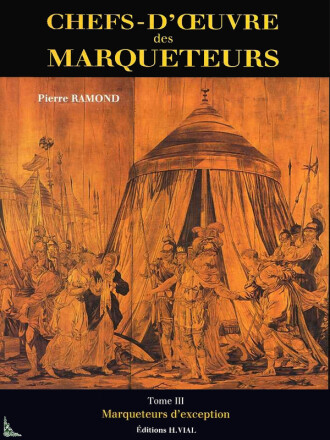
- Masterpieces of marquetry Vol. 3, Exceptional marquetry inlayers199965.00 €Masterpieces of marquetry Vol. 3, Exceptional marquetry inlayers, by P. Ramond, Ed. Vial, 10 inches x 14 inches ( 25 cm x 35 cm ), hardcover book with 136 full color pages
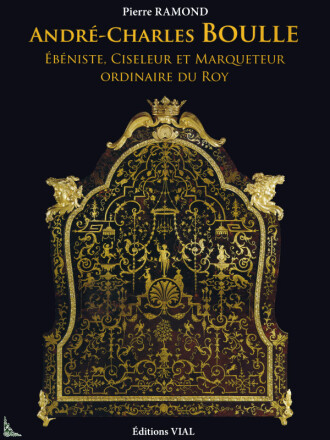
- André-Charles Boulle, cabinetmaker, carver and marquetry inlayer of the King2011110.00 €André-Charles Boulle, cabinetmaker, carver and marquetry inlayer of the King, by P. Ramond, Ed. Vial, 10 inches x 14 inches ( 25 cm x 35 cm ), hardcover book with 208 full color pages
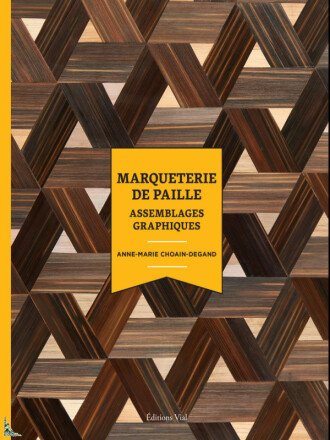
- Straw marquetry, graphic assemblies201949.00 €Straw marquetry, graphic assemblies, by A.-M. Choain-Degand, Ed. Vial, 9 inches x 11-½ inches ( 23 cm x 29 cm ), hardcover book with 144 full color pages
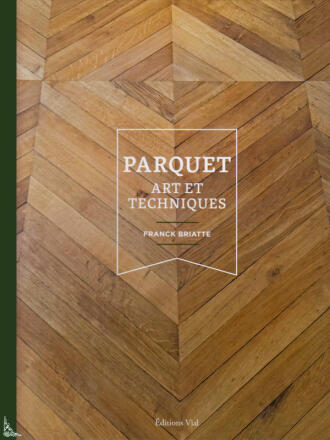
- Parquet floors: Art and Techniques202464.00 €Parquet floors: Art and Techniques, by F. Briatte, Ed. Vial, 9 inches x 11 inches ( 23 cm x 28.5 cm ), hardcover book with 272 full color pages
- Cabinetmaking: Technology and practice202354.00 €Cabinetmaking: Technology and practice, by F. Germond, Ed. Vial, 8-½ inches x 11 inches ( 21.5 cm x 28.5 cm ), hardcover book with 192 pages
- André Charles Boulle, Cabinetmaker202439.00 €André Charles Boulle, Ébéniste, de M. Deldicque, Ed. Monelle-Hayot, 24 cm x 28 cm, relié avec 376 pages couleurs
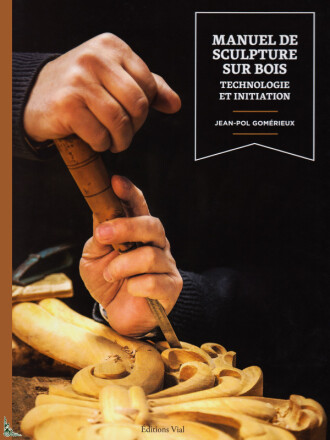
- Manual of wood carving, Technology and Initiation201859.00 €Manual of wood carving, Technology and Initiation, by J.P. Gomérieux, Ed. Vial, 8 inches x 12 inches ( 21 cm x 30 cm ), hardcover book with 168 color pages